Early Settlement Patterns Across Regions
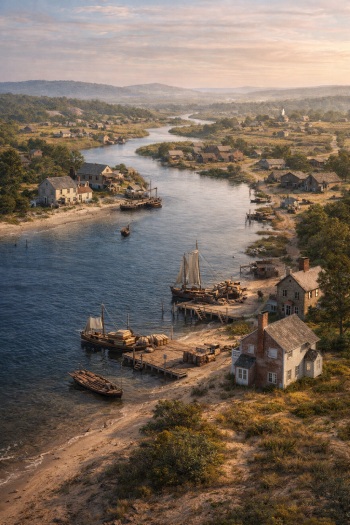
Georgia’s earliest communities formed in response to access to land, water, and trade opportunities. Coastal areas and inland river systems were among the first to be settled, as they allowed for transportation and agricultural activity. Over time, settlers expanded into new regions, creating distinct community structures based on local conditions.
As migration continued, different areas of the state developed unique settlement patterns. These patterns were influenced by available resources, economic opportunities, and the cultural backgrounds of incoming populations.
Coastal and River-Based Communities
Early settlements in Georgia were often established along the coast and major rivers, where transportation and trade were most accessible. These communities relied heavily on waterways to move goods such as timber, crops, and other resources. Ports and river towns became important centers of economic activity, connecting local producers with broader markets.
Over time, these areas developed structured communities with defined roles in trade and administration. While modern infrastructure has reduced reliance on waterways, many coastal and river-based towns still reflect their origins through their layout, architecture, and economic focus.
Expansion Into Inland Regions
As land became more accessible, settlers moved inland, forming small farming communities across Georgia’s interior. These settlements were typically centered around shared resources such as crossroads, local markets, and places of worship. Over time, they evolved into permanent towns with schools, local governance, and commercial activity.
The inland expansion contributed to the development of a diverse network of communities, each shaped by its environment and economic base. Many of these towns continue to maintain strong connections to their early agricultural roots.
North Georgia Mountain Communities
The mountainous regions of North Georgia developed differently from other parts of the state due to their terrain and relative isolation. These communities were shaped by limited transportation access and smaller-scale economic activity, resulting in distinct cultural and social characteristics.
Despite these challenges, mountain communities established stable local systems that emphasized self-sufficiency and close social ties. Today, these areas continue to balance preservation with gradual development.
Isolation and Self-Sufficient Lifestyles
North Georgia mountain communities historically experienced a degree of isolation due to difficult terrain and limited infrastructure. This isolation influenced how communities functioned, with residents relying on local resources and strong cooperation among neighbors.
Agriculture in these regions was often small-scale, supplemented by hunting, forestry, and local trade. Social structures tended to be tight-knit, with traditions and practices passed down through generations. These characteristics continue to shape the identity of mountain communities today.
Cultural Continuity and Tourism Growth
While many mountain communities have preserved their traditional character, tourism has introduced new economic opportunities. Visitors are drawn to natural landscapes, historic towns, and regional crafts, contributing to local economies.
This growth requires careful management to ensure that development does not compromise cultural heritage. Many communities focus on maintaining their identity while adapting to changing economic conditions, balancing preservation with sustainable tourism.
Rural Communities and Agricultural Identity
Rural Georgia has managed to become inseparable from the state community, whereas agriculture still plays a major role in the state's economic fabric. Very often, most of these rural communities are separated over great distances with economies revolving around agriculture, natural-resource management, and locality marketplaces.
Rural farming communities have been able to withstand the changes brought about by large-scale relocations and changing market demands. They remain connected to land-use and seasonal cycles, slowly evolving-in the modern sense-whilst still retaining antediluvian spirits.
Farming Networks and Local Economies
Agricultural production has historically shaped rural communities throughout Georgia. Crops such as peanuts, cotton, and produce have supported local economies and influenced settlement patterns. Farming communities developed networks for processing, storage, and distribution, connecting them to regional and national markets.
These economic systems created stable, though sometimes fluctuating, local economies. Even as farming practices evolve, agriculture remains a defining feature of rural community identity.
Community Life and Regional Traditions
Rural communities often maintain strong social connections through shared traditions and local events. Seasonal festivals, agricultural fairs, and community gatherings play an important role in bringing residents together and reinforcing cultural continuity.
These traditions help sustain a sense of identity and belonging, particularly in areas where populations may be smaller and more dispersed. They also contribute to preserving knowledge and practices that reflect the region’s history.
Modern Community Development and Suburban Growth
In recent, modern community development appeared in both suburban and urban-adjacent settings on a grand scale following economic diversification and much faster transportation with regard to demographic boom.
The use of modern town planning considers much more the growth of the community vis-a-vis the importance of infrastructure and housing with also the environmental issues. These modern communities become quite different from traditional towns but, reflecting some regional sense, have remained influenced tremendously by regional dwelling.
Describing suburban development puts much emphasis on the following of the major cities like Atlanta; they have swallowed up whole counties and grown massively by an amalgamation of populations finding jobs. Suburban development is either part of the city or serviced by the city.
Planned-use systems provide for all the necessary activities of life: schooling, shopping, and transport. Their physical existence is proof of the changing world making up the Georgia landscape.